Got a Flat? What to Do in the First 10 Minutes (and When a Tire Can Still Be Repaired)
You’re heading to the beach or commuting along Highway 98 when you hear the thump-thump of a tire losing air. It’s unsettling, but what you do next can protect you, your passengers, and your wheel.
Here’s a simple first-10-minutes plan, how to tell when a tire might be repairable, and when it’s safer to call for help. If you’re searching for tire repair near me in Panama City Beach, we’ll also explain what to expect from a careful inspection.
What should you do in the first 10 minutes with a flat tire?
First, how do you get safely off the road?
Keep a firm grip on the wheel, ease off the accelerator, and turn on your hazard lights. Slow down gradually and steer toward a safe place out of the travel lane. A parking lot or side road is preferable; if those aren’t available, look for level ground as far from moving traffic as possible.
Once stopped, put the vehicle in Park, apply the parking brake, and assess the situation from a safe position. Don’t stand on the side facing traffic. On a narrow or busy shoulder, changing a tire yourself may be more dangerous than waiting for roadside assistance. Stay in the vehicle if you can do so safely, or get out on the side away from traffic and move well clear of the roadway.
The AAA flat-tire safety guide also recommends choosing a safe location before attempting a change. If you can’t get clear of traffic, don’t risk it, call for a tow or roadside help.
Is the tire fully flat or just low?
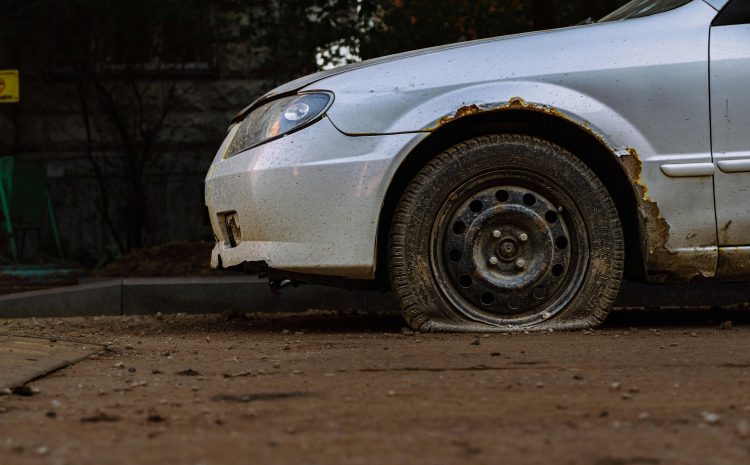
From a safe spot, look at the tire without reaching into traffic. A tire may look low but still hold some air; a fully flat tire may sag against the ground or leave the wheel rim close to the pavement. A visible nail or screw doesn’t tell you whether the tire is safe to drive on.
If a nail is still in the tire, leave it in place. It may be plugging the hole as much as anything else, and pulling it on the shoulder can deflate the tire the rest of the way.
Don’t drive on a completely flat tire or let the rim roll on the road. Even a short distance can damage the tire internally and harm the wheel or other vehicle components. If you’re unsure how flat it is, choose the cautious option: stop and call for assistance.
Should you change to the spare or call for a tow?
A spare may be an option if you’re well away from traffic, have the right equipment, and feel confident following your vehicle’s instructions. Don’t attempt a roadside change on an exposed shoulder just to avoid a wait.
Call for a tow or roadside assistance if the location is unsafe, you don’t have a usable spare, the wheel looks damaged, or you’re not comfortable changing it.
Can a flat tire be repaired, or does it need replacing?
It depends on where the puncture is, how large it is, the tire’s condition, and whether it was driven while flat. A nail or screw in the central tread area is often repairable after a technician removes the tire and checks the inside.
The U.S. Tire Manufacturers Association’s puncture-repair guidance says a proper repair requires removing the tire from the wheel for an internal inspection. It limits repairs to the tread area and specifies a maximum puncture size of ¼ inch (6 mm). Tire-maker rules may also apply.
Replacement is usually the safer choice if there’s:
- A puncture in the sidewall or damage extending into the shoulder
- A bulge, which can indicate damage to the tire’s internal structure
- Internal damage from driving while flat or severely underinflated
- An existing improper repair or damage that falls outside repair guidelines
Should you pull the nail out and plug it yourself?
No, and here’s the practical reason: that nail may be the only thing holding air in the tire right now. Pull it in a parking lot and you can turn a slow leak into a fully flat tire.
Outside-in plugs are quick, but they leave the inside of the tire uninspected and don’t seal the inner liner. A proper repair means the tire comes off the wheel so a technician can look inside, then seal the puncture channel and the liner together. That inside look is what tells you whether the tire is safe to keep using.
We go deeper on repair methods and safe repair zones in our guide to patch vs. plug vs. replacement.
Is a slow leak safe to ignore?
No. A tire that repeatedly loses pressure needs attention even if it still looks drivable. Low pressure can affect handling and cause additional heat and stress inside the tire. If there’s a nail, screw, valve issue, or leak at the wheel, topping up the air may not solve the cause.
Check pressure with a gauge when it’s safe, and use the pressure listed on your vehicle’s door-jamb label, not the maximum pressure printed on the tire sidewall. If the tire keeps losing air, avoid unnecessary driving and arrange an inspection.
What should you know about a temporary spare?
A compact “donut” spare is meant to get you through an emergency, not serve as a regular tire. Check the owner’s manual for its speed and distance limits, then follow those limits. Check the spare’s pressure, too; an unused spare can still be underinflated.
After fitting a spare, your TPMS warning light may stay on or the system may not show a pressure reading for that wheel. Some vehicles don’t monitor the spare. Follow the vehicle manual, and have the regular tire and TPMS checked once you reach a shop.
Is a can of tire sealant a real repair?
Sealant or an inflator kit can be a temporary way to get out of a difficult roadside situation if the kit is suitable for your vehicle and tire. But it doesn’t replace a proper inspection and repair. It may not work for larger punctures or sidewall damage, and it can complicate the next service. Tell your technician if you’ve used one.
What mistakes should you avoid after a flat?
- Don’t overfill the tire. Use the pressure on the vehicle’s door-jamb label and check it with a gauge.
- Don’t drive on a rim or continue driving on a completely flat tire.
- Don’t plug a sidewall. Sidewall damage calls for replacement, not a shortcut.
- Don’t skip the recheck. After using a spare or temporary sealant, get the tire inspected and check that pressure and TPMS warnings are addressed.
Why does a walk-in tire shop matter when you’re stranded?
A flat rarely fits neatly into the day’s schedule. A walk in tire shop can make it easier to get the damage assessed without waiting for a future appointment. At Express Tire & Auto Service, we welcome walk-ins and offer same-day auto repair whenever possible. We’ll inspect the tire, explain whether repair is appropriate, and provide upfront pricing before work begins.
Our ASE-certified technicians bring more than 20 years of dealership leadership experience and over 50 years of combined expertise. As a family-owned shop, we aim to give you straightforward advice and personal attention, not pressure to choose a repair your tire doesn’t need.

If you’re dealing with a flat or a slow leak, we’re at 506 Navy Blvd, Panama City Beach, FL 32407. Contact us or stop by during business hours, Monday through Friday. We’ll help you understand your options and get back on the road with more confidence and peace of mind.
Learn more about our tire and auto services or read our guide to safe tire repair zones.