Looking For a Walk-In Tire Shop? 5 Things You Should Know Before You Head In
It’s a scenario every driver in Panama City Beach knows too well. You’re heading down Highway 98, maybe on your way to work or the beach, when you notice that dreaded “low tire pressure” light flicker on the dashboard. Or perhaps you’ve been noticing a strange vibration in the steering wheel for a few days, and today it finally feels like enough is enough.
When you don’t have an appointment booked weeks in advance, a walk-in tire shop is your best friend. But walking into a service center unprepared can feel a bit overwhelming. Will they have your size? How long will it take? Are you actually getting a good deal, or just the only thing they have in stock?
At Express Tire & Auto Service, we believe that an informed customer is a happy customer. We want you to feel confident the moment you step through our doors. Before you head into a local shop, here are the five essential things you should know to ensure your visit is smooth, safe, and cost-effective.
1. Know Your “Secret Code” (The Tire Size)
One of the most common delays at a walk-in tire shop happens when a customer isn’t sure what size tires their vehicle requires. While we can always look this up for you, knowing it beforehand helps us check our inventory immediately and gives you a head start on pricing.
You don’t need to be a mechanic to find this. You can find your tire size in two places:
- The Driver’s Side Door Jamb: There is usually a sticker (the placard) that lists the recommended tire size and ideal inflation pressure.
- The Tire Sidewall: Look for a string of numbers and letters that looks something like P225/65R17.
What those numbers mean:
- 225: This is the width of the tire in millimeters.
- 65: This is the aspect ratio (the height of the sidewall relative to the width).
- R17: This tells you the tire is a Radial and fits a 17-inch wheel.
Knowing this “secret code” ensures that if you’re looking for tires and alignment services, we can give you an accurate quote the second you walk in.

2. Is It a Simple Fix or a Full Replacement?
Before you commit to buying a brand-new set of rubber, it’s worth knowing if your current tire can be saved. Not every flat tire requires a replacement. If you’ve picked up a nail or a screw, the location of that puncture is the deciding factor.
- The Safe Zone: If the puncture is in the central tread area (the part that actually touches the road), it can usually be patched and plugged safely.
- The No-Go Zone: If the puncture is on the sidewall or the “shoulder” (the curved edge of the tire), it cannot be repaired. The sidewall undergoes too much flex and pressure; a patch here is a blowout waiting to happen.
We always recommend checking out our guide on nail in tire repair zones to understand when it’s safe to save money and when it’s vital for your safety to replace the tire.
3. Consider the Florida Climate and Your Driving Habits
Not all tires are created equal, especially here in Florida. Our unique environment: high heat, intense humidity, and sudden tropical downpours: places specific demands on your tires.
When you walk into a shop, consider these factors:
- Wet Traction: In Panama City Beach, we get heavy rain. You want a tire with deep grooves designed to evacuate water quickly to prevent hydroplaning.
- Heat Resistance: The asphalt on our roads can reach scorching temperatures. Tires with a high “Temperature” grade (found on the sidewall) will last longer and perform better in the summer heat.
- Mileage Warranty: If you do a lot of commuting or long-distance driving, look for a tire with a 50,000 to 80,000-mile warranty.
As your local automotive experts, we don’t just sell you what’s on the rack; we recommend tires that make sense for the way you actually drive.

4. Ask About the “Total Package” (Beyond Just the Rubber)
When you walk into a tire shop and ask for a price, make sure you’re comparing “apples to apples.” Some shops might give you a low “sticker price” for the tire itself, but then add on several fees that catch you off guard.
When you’re at the counter, ask if the quote includes:
- Mounting and Balancing: Putting the tire on the rim and ensuring it spins without vibrating.
- Valve Stems: Replacing the little rubber air intake (highly recommended, as these degrade over time).
- Tire Disposal Fees: Most states, including Florida, require a small fee to recycle your old tires.
- Road Hazard Protection: This is an optional “insurance” for your tires that covers you if you hit a pothole or a nail shortly after purchase.
Transparency is a core value here at Express Tire & Auto Service. We believe in explaining the “why” behind every recommendation, so you never feel like you’re paying for something you don’t need.
5. Prepare for the Wait (and the Inspection)
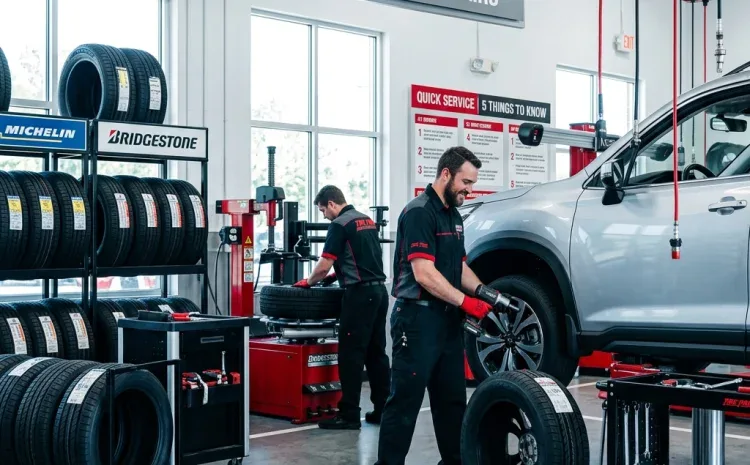
The nature of a “walk-in” service means you are trading the certainty of an appointment for the convenience of immediate service. Depending on the time of day, there might be a short wait.
A professional shop should offer:
- A clean, comfortable waiting area.
- Clear communication about how many vehicles are ahead of you.
- A complimentary safety inspection.
While your car is on the lift for tires, it’s the perfect time for a technician to check your brake pads and rotors. Since your wheels are already off, we can easily see if your brakes are getting thin. Identifying these issues early can prevent the “metal-on-metal” grinding that leads to much more expensive repairs later.

Common Mistakes to Avoid as a Walk-In Customer
To make your experience as painless as possible, try to avoid these three common pitfalls:
- Replacing Only One Tire: Unless your tires are nearly brand new, replacing just one can lead to handling issues or even damage to your vehicle’s differential. Usually, it’s best to replace them in pairs (front or back) to keep the traction even.
- Ignoring the Wheel Lock Key: If your car has special “locking” lug nuts to prevent theft, make sure you know where the key is (usually in the glove box or with the spare tire). We can’t change your tires if we can’t get the wheels off!
- Skipping the Alignment: This is the big one. If you put brand-new tires on a car that is out of alignment, those tires will wear out in a fraction of the time they should.
Why a Wheel Alignment is Non-Negotiable
We often tell our neighbors that buying new tires without an alignment is like buying a pair of expensive running shoes and then dragging your feet on the pavement.
A professional wheel alignment ensures that your tires are perfectly parallel to each other and perpendicular to the road. This prevents “feathering” or uneven wear and ensures your car drives straight instead of pulling to the side. Especially with the potholes and construction we sometimes face in the Panhandle, a quick check can save you hundreds of dollars in the long run.

Your Local Partners in Road Safety
Walking into a tire shop doesn’t have to be a stressful experience. By knowing your size, understanding the repairability of your tires, and asking the right questions about the total cost, you put yourself in the driver’s seat, literally.
At Express Tire & Auto Service, we treat every walk-in like a neighbor. Whether you need a quick patch, a fresh set of all-season tires, or just some advice on why your car is vibrating, we’re here to help. Our goal is to provide you with the peace of mind that comes from knowing your vehicle is handled by professionals who care about your safety.
If you’re noticing tread wear or your car just hasn’t been handling right lately, don’t wait for a blowout. Stop by and see us today or contact us to ask any questions you might have. We’ll get you back on the road with confidence!